Sudan Crisis: “We are called to accompany those whose suffering goes unseen.”
13 January 2026|Sara Muzamil; Kristen Lazarus
“When the war broke out in Sudan more than two years ago, my short visit to Australia to see my daughter turned into an unexpected exile.”
Asmaa*, a woman participating in JRS Australia’s Finding Safety Project, shared her grief about the recent escalation of conflict in Sudan with Sara Muzamil, the Project’s Manager. We are using a pseudonym to protect Asmaa’s anonymity.
“I could no longer return home,” Asmaa recounted. “Like many Sudanese people stranded across the world, I had no choice but to seek protection in a foreign land”.
Asmaa has sought protection in Australia, and she wrestles with complicated feelings of guilt and helplessness for feeling safe here while her family remain on the front lines of the world’s worst humanitarian crisis.
“I am heartbroken because my entire family is in El-Fashir,” Asmaa shared. “My brother has five children, and they can’t find food. I cry day and night because I feel so helpless.”
“When my husband was killed by the Janjaweed in 2013, my brother took care of my children as if they were his own. And now, when he needs me, I can’t help him.”
Understanding the crisis in Sudan
After many decades of protracted conflict, Sudan was thrust into a crisis of unprecedented scale in April 2023, when hostilities erupted between the Sudan Armed Forces (SAF) and the Rapid Support Forces (RSF).
This current crisis has its roots in the power struggle that ensued following the ousting of long-standing dictator Omar Hassan al-Bashir in 2019, and the subsequent failure to agree on the terms of a transition to civilian rule. The conflict began initially in the capital city of Khartoum, before rapidly engulfing other regions across the nation.
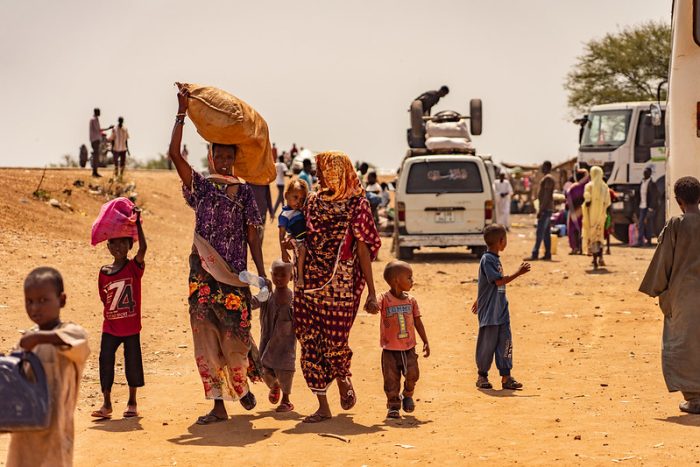
This has exacerbated an already extreme humanitarian crisis that was unfolding in the nation, leaving 30.4 million Sudanese – half of Sudan’s population – in need of humanitarian aid. The scarcity of basic living essentials, combined with ongoing violence, has driven many civilians to flee their homes, transforming the conflict in Sudan into the world’s largest displacement crisis. As of April this year, nearly 13 million people have been forced to flee their homes due to the conflict.
This mass displacement has overwhelmed already fragile services in the regions receiving those fleeing the violence, forcing families into dangerously inadequate living conditions. The pressure on neighbouring countries such as Chad and South Sudan grows daily, as they struggle to absorb the influx of people in need of safety.
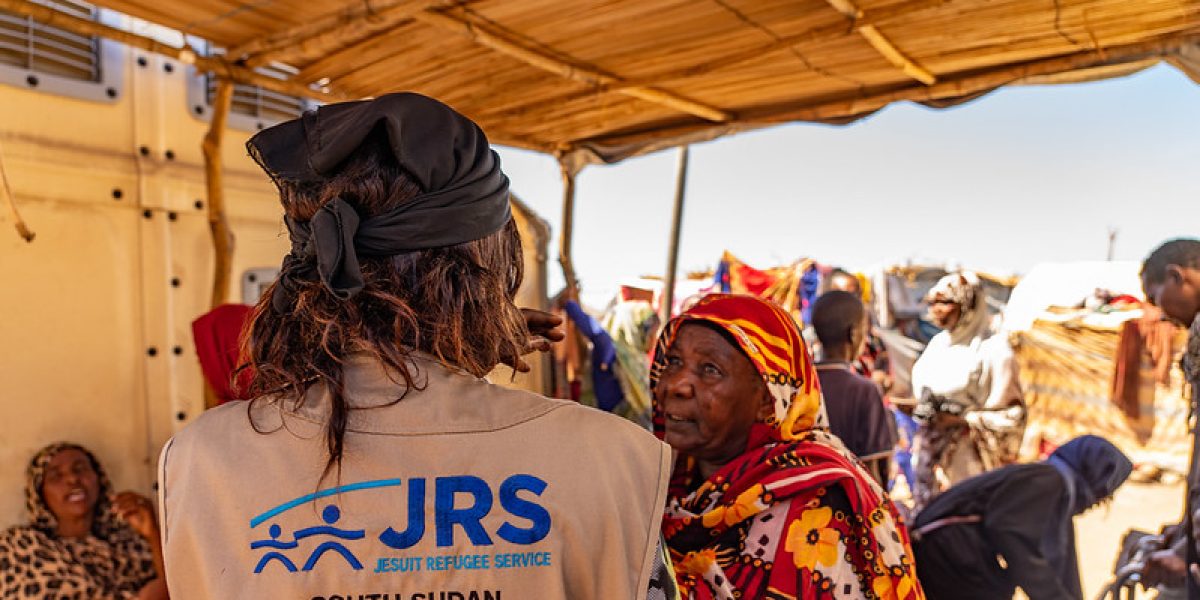
Humanitarian organisations, including JRS, continue to provide vital assistance, including food and essential items, mental health support and education programs, but the scale of need is far outpacing available resources. In areas such as Darfur and Kordofan, hunger has reached catastrophic levels, with communities facing severe food insecurity and malnutrition. At the same time, disease outbreaks are spreading rapidly, and extreme weather events are further deepening an already dire humanitarian crisis.
In late October 2025, the conflict took yet another chilling turn when the RSF seized control of El Fasher, the capital of North Darfur. Humanitarian observers have since reported mass killings of civilians and widespread sexual violence in El Fasher.
“Sudan is facing a humanitarian nightmare that continues to slip out of the world’s line of sight,” says Fr Brett O’Neill S.J., JRS Australia’s Country Director. “Civilians are enduring unimaginable suffering, and as an international community we must not look away.”
Women and girls on the frontlines of crisis
The conflict in Sudan has involved a direct campaign targeting women and girls, with sexual violence being deployed systematically across the nation.
An Independent International Fact-Finding Mission for the Sudan, submitted to the UN Human Rights Council found in October 2024, found that the RSF and its allied militias have committed war crimes and crimes against humanity. These include widespread sexual and gender-based violence, rape, abduction, the recruitment and use of children in hostilities, and sexual slavery.
Today, more than 12 million people in Sudan are at risk of gender-based violence.
This reality is felt deeply in JRS Australia’s Finding Safety Project, which accompanies women and children who have endured or are at risk of gender and sexual violence. Finding Safety Project Manager, Sara Muzamil emphasises that this is carving deep, unseen wounds into the lives of women and girls.
“Women are carrying the heaviest weight of this war,” Sara explains. “Their bodies have become the battlegrounds in which this war is being fought, yet their suffering remains invisible.”
“Every week at our Women’s Space, we meet women from Sudan who share this story… and the escalation of conflict brings back memories of the injustices they have already endured, and renews fears for their family members at home or displaced to neighbouring countries.”
Australia has a role to play
For thousands of Australians, the conflict in Sudan is not a distant crisis. With more than 50,000 Sudanese-born Australian residents and 130,000 Australians of Sudanese heritage, the conflict reverberates through communities across the country, as many worry for loved ones caught in the crossfire.
As members of the Australian community, we all must feel compelled to stand up for the people of Sudan and support pathways to safety, peace, and justice.
At JRS Australia, we also stand with our colleagues in the region who support Sudanese refugees in neighbouring countries, including Chad and South Sudan. Learn more about this work here.
Australia’s steps to support Sudanese refugees
JRS Australia welcomes the Federal Government’s steps to address the crisis unfolding in Sudan, including:
- Acknowledging the atrocities occurring in Sudan, including reports of mass killings and sexual violence in El Fasher;
- Calling for an immediate end to the violence and unrestricted humanitarian access; and
- Announcing $10 million in additional humanitarian assistance for the region, including dedicated support for survivors of gender-based violence.
However, there remains an urgent need for the Federal Government to forge a clear pathway to safety for Sudanese nationals.
Consistent with guidance from the UNHCR, we argue this should include:
- supporting Sudanese nationals on temporary visas in Australia to extend their stay and access permanent visa pathways;
- facilitating and expediting family reunification procedures for Sudanese nationals in Australia with family members in Sudan or displaced in the region; and
- prioritising the processing of family, skilled, visitor and humanitarian visas for Sudanese nations to ensure timely access to safety here in Australia.
Given our work with people seeking asylum here in Australia, we know that to ensure dignity and self-agency, Sudanese visa-holders must be granted essential rights on arrival, including work rights, access to Medicare, and education for children.
We also encourage the Federal Government to continue to support global efforts to apply diplomatic pressure, pursue ceasefire negotiations, and establish safe humanitarian corridors for civilians.
Stand with Sudanese refugees
This crisis is Sudan is a human one, reflected in the lives of millions of Sudanese people enduring unimaginable hardship, and demonstrating remarkable resilience. Our responsibility is to stand with them, listen to their voices, and insist on their right to safety and peace.
We urge the Federal government to show leadership in this time of need, and respond to the crisis in Sudan equitably in line with its response to conflicts in Afghanistan, Ukraine, and Gaza.
“We are called to accompany those whose suffering goes unseen,” shared Fr Brett O’Neill, S.J.
“When people are silenced by war, it is our duty to amplify their strength and calls for justice. In this moment, we cannot turn aside. The people of Sudan deserve to be seen, heard, and protected. We stand with Sudan and wish peace and justice for all those subject to violence and displacement.”
Please join us in standing with the people of Sudan.
Explore more