“No Matter How High the Mountain.” Read Ahmad’s Story for National Skills Week 2026
27 August 2026|Ahmad*
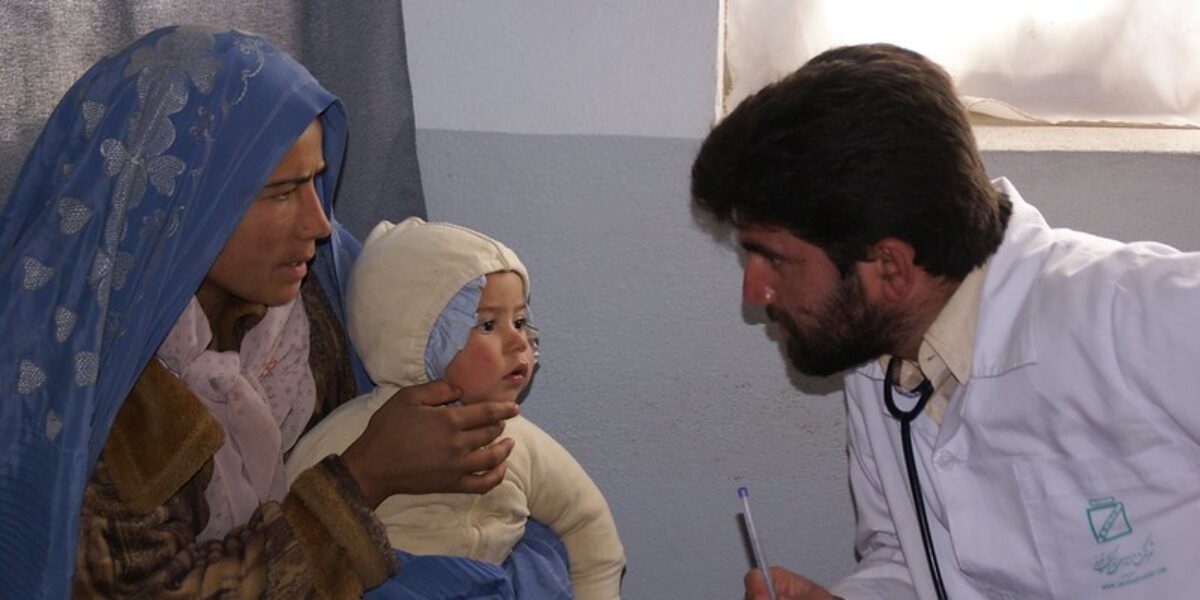
Ahmad* is a father, husband, doctor and public health advocate.
Throughout his journey, Ahmad has found what he describes as his “pass through the mountains”: a purpose, and a persistence, that has carried him through difficult times, has changed the course of his life, and has inspired him to change the lives of others.
The theme of National Skills Week (25-31 August 2026) is “Life Changing”.
In honour of this week, Ahmad* reflects on his experience rebuilding his career in Australia, advocating for improved skills recognition for migrants and refugees: and his own learning about what remains constant within a man, when so much has been left behind.
From the beginning
When Ahmad was a child, he watched his mother struggle with asthma.
“I remember knowing then that I wanted to be a doctor,” he says. “I wanted to help people like my mother.”
It took many years to realise this dream. Ahmad needed near-perfect results to qualify for medical school at Kabul University of Medical Sciences. He studied hard and achieved these results. While studying, he then volunteered for four years, as an emergency nurse. This was hard work, with patients facing very serious injuries, but Ahmad felt satisfied and purposeful – like he was doing what he was made for.
When Ahmad graduated as a medical doctor, he began working rurally, with communities who often had little access to medical care. Again, he felt that pull, to work with people, and in places, where he could make a real difference.
“I realised that as a doctor, I could treat one patient,” he reflects. “In public health, I could help a whole community.”
Ahmad went on to complete a Master of Public Health and build more than 20 years of experience in disease prevention, immunisation, health management and emergency response, including with organisations such as UNICEF, WHO and the ICRC.
One of his proudest achievements in public health was his work advocating for the rollout of polio vaccinations across rural Afghanistan. Seeing children protected from illness gave him a profound sense of purpose.
“I could see that these children were being vaccinated, they weren’t getting sick, and their lives were changing. I knew I was making a difference.”
Today, that same drive to protect and improve people’s lives continues to shape Ahmad’s work.
But the mountains he has faced have been high, and his passage through them, winding.
Starting again
Ahmad and his family arrived in Australia in 2023, following the fall of Kabul.
“You leave your profession, your belongings, your home, your assets, community – everything you’ve built – and you have to start again,” he shares.
After decades of professional experience, both Ahmad and his wife were faced with the challenge of navigating substantial loss, while rebuilding their lives in a new country, with new systems that did not recognise their years of experience and qualifications.
“To tell you the truth, when I arrived here, I was struggling,” he says. “Mental health was a challenge. So many people in my community were suffering from PTSD.”
“I needed to stay strong for my family, and it felt like we were trying to rebuild our lives from nothing.”
But Ahmad has a strong will, and a bright spirit.
“Everyone has always told me I have positive energy,” he shares. “And it is important to stay positive. When the world feels hard, that’s okay. We can change it.”
“I had to say to myself: “You can do this. I am starting again, but I am not starting from nothing.””
Ahmad began looking for ways to build on what he already knew, and to develop the skills and connections he would need to work out his next steps in Australia.
He enrolled himself in a project management course at TAFE. This took one year. He also decided he wanted to improve his English skills.
“I knew to work in my industry, I needed to speak English fluently.”
Pathways to Employment
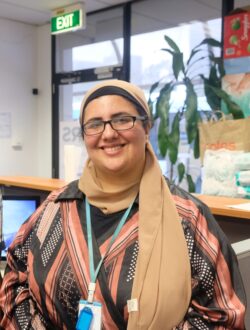
Through the community, Ahmad connected with Tamana Mirzada, Manager of JRS Australia’s Employment Program.
“JRS has helped me a lot,” shared Ahmad.
“Thanks to Tamana, who mentored me and helped me apply for a humanitarian scholarship to study English for Academic Purposes, and volunteer Margot who helped me redesign my CV. In this time, I applied for over 100 jobs. All these linkages started through JRS.”
Slowly, doors began to open.
“All those experiences with JRS gave me confidence that I was capable, that there were opportunities, and that I could find my way.”
Gifts that keep giving
While continuing to work towards recognition of his professional qualifications, Ahmad began using other skills he had brought with him.
He speaks Pashto, Hazaragi, Persian and Dari, in addition to English, and works as a multilingual community educator and translator, helping newly arrived refugees and people seeking asylum to navigate health services, access Medicare and understand important health information. He is also studying to be a professional interpreter.
This is work that feels deeply connected to his purpose, and his journey.
“I feel comfortable knowing that I am helping people. I enjoy it. But I always want to do more.”
Ahmad is now a project lead conducting health research at the Community Migrant Resource Centre, alongside the University of Technology Sydney.
This work focuses on consultations with refugee communities, to explore how people understand end-of-life care, advance care planning and the health system, and how services can better respond to diverse cultural needs.
For Ahmad, it is another expression of the work he has always wanted to do: helping people understand their health, preventing harm and making systems work better for everyone.
From protecting children from polio to helping migrant communities navigate some of life’s most difficult health decisions, Ahmad’s work today looks different, but his underlying values remain the same.
“My passion is health,” he says. “I want to keep learning and use my experience to contribute to communities.”
The opportunity to contribute
Ahmad’s experience highlights a challenge faced by many skilled people from migrant and refugee backgrounds.
There are tens of thousands of migrant workers in Australia, with years of professional experience, qualifications and knowledge, that they are not able to share. 44% of people like Ahmad, are working beneath their skill level.
“For people from refugee backgrounds, information and connections are so important,” Ahmad says. “The biggest barrier isn’t the person’s ability. It’s knowing where to go, who to speak to and how to get your skills recognised.”
Without those pathways, valuable skills go to waste, and migrant families face significant disadvantages. Highly qualified professionals are forced to take jobs far below their experience because they cannot find a way into their profession.
“So many doctors and other professionals are driving Uber”, Ahmad says.
“We need to create enabling environments for migrants and refugees to pursue their vocations, so they can continue their dreams and contribute even more to Australia.”
That is where employment partnerships can make a difference.
Through our Employment Program, JRS works with people seeking safety to identify their skills and goals and connect them with employers, education providers and community organisations. These partnerships can help turn existing skills into new opportunities, while supporting people to build the additional qualifications, networks and confidence they need to succeed.
For Ahmad, those connections have been an important part of rebuilding his professional life.
But he is still climbing.
He continues to study, work, interpret, research and pursue recognition of his professional qualifications.
“I have Plan A, Plan B and Plan C,” he laughs.
“After four years, I have finally been able to get my medical degree recognised here in Australia,” says Ahmad. “Now, I am studying every day for my qualifying exam.”
“When I can work as a doctor again, in public health, then I will be peaceful.”
Life changing
For Ahmad, skills have always had the power to change lives.
They changed his own when they gave him a profession and a way to serve others.
They are changing the lives of people from refugee and migrant communities who are gaining better access to health information and more culturally safe care.
And now, meaningful work is helping Ahmad rebuild a life in which he can use those skills again.
“In one way or another, I need to contribute,” he shares.
His journey has not been easy. But Ahmad has learned that starting again does not mean abandoning everything that came before.
He describes himself as a lifelong learner.
“I will never stop. I want to keep learning, keep building my skills and keep contributing.”
His advice to others rebuilding their lives is simple:
“Start with something small. Take it step by step. Tell yourself you can do it. Don’t give up.”
And he offers some wisdom from home, in Pashto:
“غر که هر څومره جګ وي، پر سریې لارشته “
[Ghar ka har tsomra jag wi, par sar ye laar shta], which translates to something like: “No matter how high the mountain is, there is a path over it.”
This National Skills Week, JRS Australia is proud to share Ahmad’s story, and to be part of the campaign to “Activate Australia’s Skills”, encouraging the Australian Government to tackle Australia’s skills shortage by enabling qualified migrants to work in their professions again. Learn more and sign the open letter here.
To learn more about our Employment Program, or to become an Employment Partner, visit our website here.
*Ahmad’s name has been changed to protect his privacy.
Explore more