“Where Their Struggle Is, So Is Their Strength” – Reflections from the Finding Safety Project this Homelessness Week.
30 July 2026|Chloe Watts, Support Worker in JRS Australia's Finding Safety Project
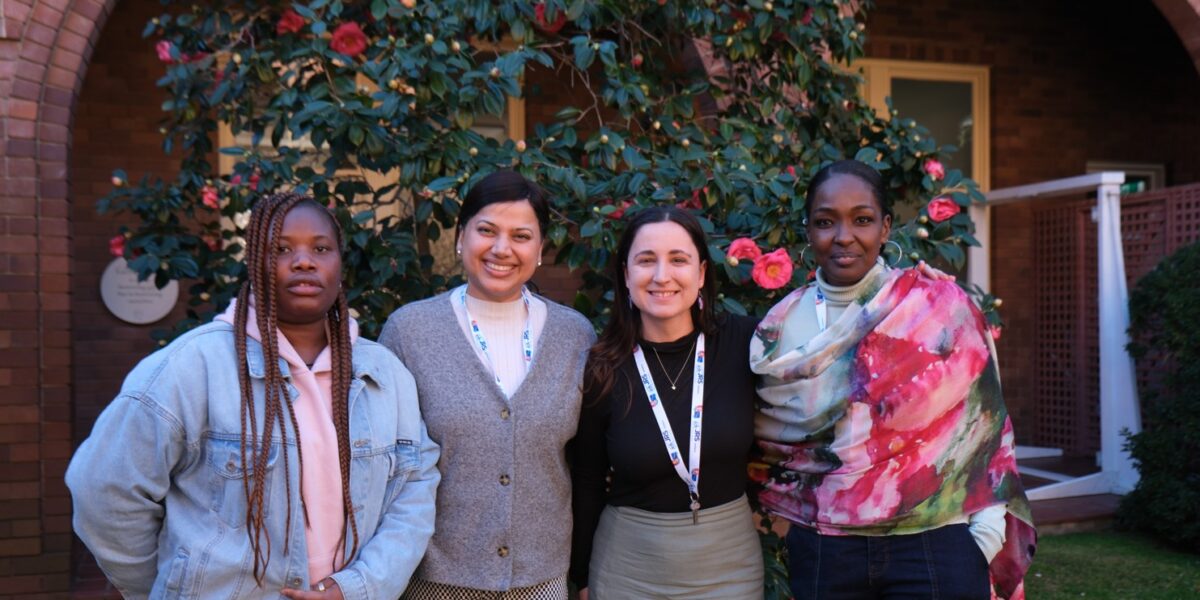
This Homelessness Week, we’re sharing a reflection from Chloe, a Support Worker in our Finding Safety Project.
As New South Wales works towards its vision of preventing homelessness before it begins, Chloe reflects on the realities facing women on temporary visas, for whom homelessness is often inseparable from sexual and gender-based violence, visa insecurity and exclusion from essential supports.
Chloe reminds us that preventing homelessness means ensuring no woman is left behind because of her visa status.
“Where Their Struggle Is, So Is Their Strength”
I am privileged to take on a new role as a Support Worker with the Finding Safety Project at JRS, supporting women on temporary visas experiencing sexual and gender-based violence (SGBV).
This Homelessness Week, it’s fitting to reflect on the intersections and unique barriers faced by migrant and refugee women.
Homelessness is a major issue for women on temporary visas, with gendered violence often being the root cause. Abuse, homelessness, and uncertain visa status intertwine to create layered marginalisation. But in the face of these struggles, migrant and refugee women display remarkable strength.
Domestic violence is the leading cause of homelessness for women and girls, according to Homelessness Australia. Uncertain visa status adds another layer of disadvantage: according to the Refugee Council of Australia, nearly 20 percent of those sleeping rough in the City of Sydney are non-residents on uncertain visas, including those seeking asylum.
Coercive control takes a unique form for migrant women. Abusive partners threaten to have them deported, have their visas revoked, have their children removed. Women on temporary visas face constant social and legal barriers when they experience gendered violence and homelessness.
Too often, we frame their attitudes as the problem: ‘Mistrust of authorities,’ we call it, as if their mistrust is the real obstacle, and not that their trust has been broken before.
Migrant women experience significantly higher rates of gender-based violence. Monash University’s national report found that one-third of migrant and refugee women had experienced some form of domestic and family violence.
Finding a safe bed in a refuge is difficult enough for any woman, let alone for women on temporary visas, for whom the situation is significantly more challenging. We see this double bind every day here at the Finding Safety Project.
Migrant and refugee women in Australia — the same women too often blamed for our worsening housing crisis — are usually ineligible and locked out of any housing supports in the first place. They are both the victims and the scapegoats in our cost-of-living crisis.
For example, women on temporary visas aren’t eligible for the Rent Choice Start Safely program here in NSW – meaning they can’t access subsidised housing to get on the rental market, even if they are experiencing violence perpetrated by an Australian citizen, and even where their children are Australian citizens.
The challenges faced by migrant and refugee women are not a product of who they are or where they come from.
They arise from the intersecting impacts of violence, visa insecurity, discrimination, and systems that too often fail to provide protection or support when it is needed most. Despite these barriers, women continue to show extraordinary resilience, determination and leadership in rebuilding their lives.
Every week with the Finding Safety Project, we help women on temporary visas navigate the enormous barriers to simply finding a safe place to sleep. Their needs extend far beyond a safe bed. We connect women with community and social supports, skills development, employment pathways, and legal advocacy.
Women on temporary visas display incredible bravery, strength, and resistance in the face of this marginalisation. They support their children, promote healing and recovery, learn new languages, find employment, and advocate for themselves day after day.
No woman should have to choose between abuse and homelessness. Migrant women must be supported and recognised for their courage, skills, and their inherent value. Where their struggle is, so is their strength.
I’m incredibly proud to be part of this journey with the Finding Safety Project, working towards a better future for women on temporary visas.
About the Finding Safety Project
 The Finding Safety Project is a key ‘missing piece’ in the services sector puzzle, bridging the knowledge, capacity and practice gap between the asylum seeker and refugee sector and the domestic and family and sexual violence support sector.
The first project of its kind in NSW and one of the first in Australia, the Finding Safety Project continues to lead the way by resourcing women, improving safety outcomes and building community capacity to prevent and respond appropriately to complex sexual and gender based violence (‘SGBV’).
Learn more about our Women’s Space here.
Explore more