Batoul’s Story: From Gaza to Sydney
08 December 2025|Batoul Hashem
Batoul’s Story: From Gaza to Sydney
Batoul arrived from Gaza in late 2023, two months after the war began. She left only two months before she would have finished her dentistry degree. Now living in Sydney with her family, Batoul is a creative adventure-seeker who loves trying new things.
Batoul is a member of JRS Australia’s Refugee Leadership Program, where she raises awareness and advocates for herself and her people by sharing her story with the Australian community.
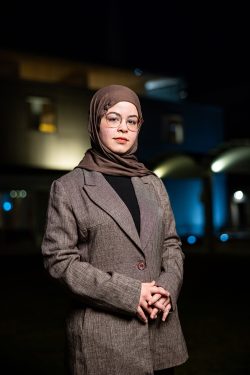 My name is Batoul, and I am just a girl from Gaza.
My family and I sought refuge in Sydney in November 2023. We were lucky, because my brother was living here in Sydney, and was able to sponsor us to come to Australia.
I often say I am “lucky,” though it is a word I hesitate to use. I am luckier than many others who remain in Gaza without a relative to help them escape.
I am luckier than most people in Gaza, because I have not yet lost any of my immediate family or close friends.
I had always dreamed of travelling and maybe living somewhere else one day.
But I never thought it would be like this. I never thought I would be forcibly removed and displaced from my home, my friends, and everything I know.
I never thought I might not be able to go back.
Leaving my home
Since my family and I evacuated in the first few days of the genocide, we did not have the chance to take any of our belongings with us.
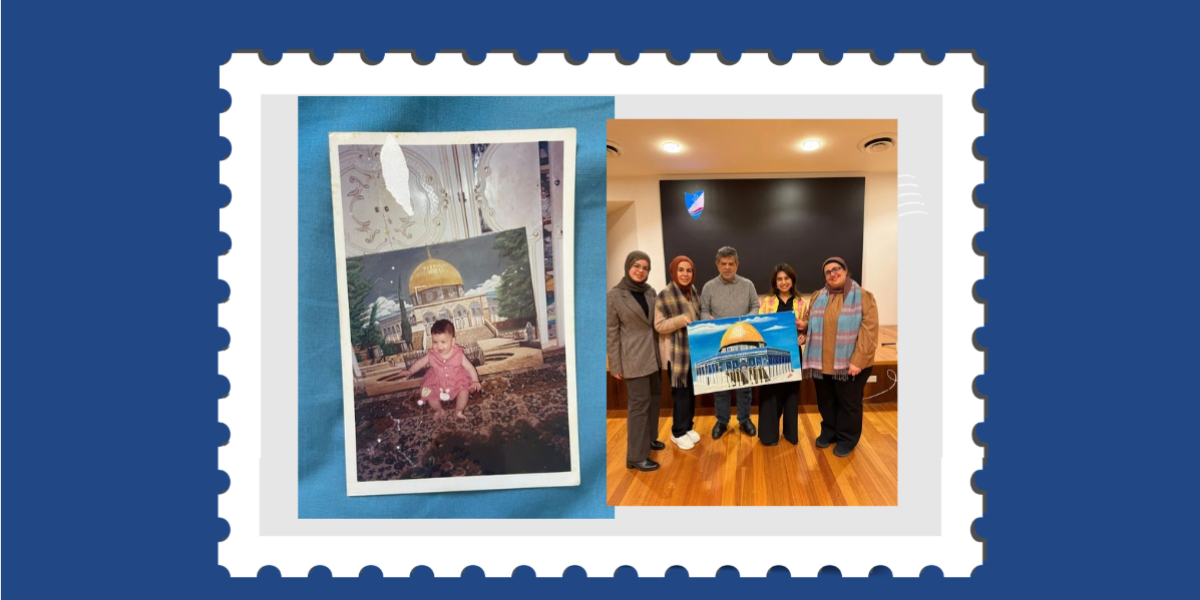
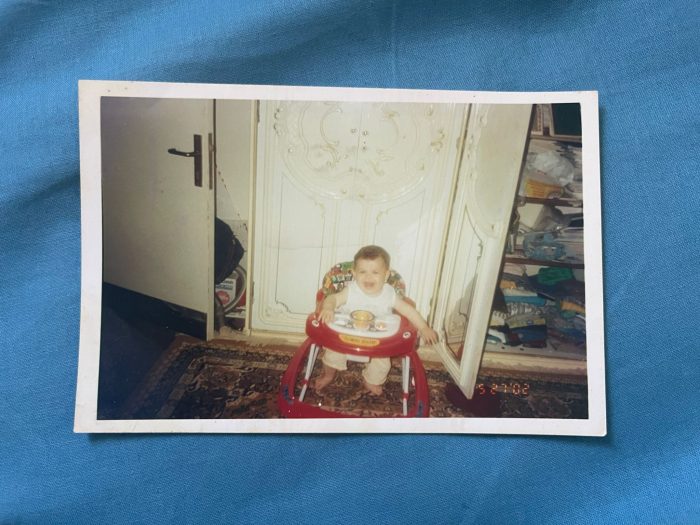
When we fled our home, we had only five minutes to leave. I rushed to my room, grabbed my childhood photos and my laptop, and then we ran. We brought nothing else with us, except our clothes.
Leaving wasn’t something we wanted, it was something we had to do. My brother was already here in Sydney, and through him, we managed to get visitor visas. But the process was long, uncertain, and exhausting.
We had to go through Egypt first, which was incredibly difficult; crossing borders, waiting endlessly, not knowing what would happen next. We waited an entire day just to hear my dad’s name called so he could come with us.
But in the end, it was for nothing. He had to go back to Khan Younis while we got on a bus at 11 PM for a 10-hour bus trip to Egypt.
I could not sleep at all. All I could think about was my dad, my best friend Nour and how ridiculous life is.
We could only stay in Egypt for 48 hours before being fined, so we had to travel immediately, and board a flight to Australia.
In just two days, we spent 10 hours on the road and 18 hours in the air. The exhaustion was indescribable, but we knew this was our path to safety.
Arriving in Australia
I arrived in Sydney in November 2023. It was my first time in an English-speaking country. Communication was a bit of a challenge, and adapting to everything: culture, routine, even the way people spoke, was overwhelming. It was even worse for my parents.
It takes a lot of strength to start again, without any of the evidence of your life’s work. We had no furniture, no kitchenware, no bedding, no souvenirs, no photo albums – none of those essentials that make a house a home.
For the first three months, my family and I lived here on a visitor visa, which meant no access to work, education, or healthcare. People on temporary visas experience lots of challenges like this when they first come to Australia. It makes it even harder to settle in to life here and become part of the community.
I was introduced to JRS during this time, and honestly, that was a turning point for me and my family.
From the moment we joined the community, we were welcomed into so many of their classes and activities, which helped us feel more connected and supported here in Sydney.
The people involved with JRS have this incredibly warm and genuine way of making you feel seen and included, and that made a huge difference during a time when everything in our lives felt new and uncertain.
Through JRS, I also learned about their leadership program, and that opened up a whole new chapter for me. Every time I participate in an event or workshop, I feel myself becoming a little more confident, and a little more comfortable in finding my voice.
The support, encouragement, and sense of belonging they provided have played a big role in helping me feel welcomed in Australia.
Of course, adjusting to a new country comes with challenges: language, culture, and the heaviness of what we left behind, but the JRS community consistently helped ease those barriers.
They created a space where I could grow, contribute, and feel hopeful again.
And, I remind myself that I am lucky to have experienced both the good and the difficult parts of moving to another country.
Restarting my career
Once we were able to switch to a temporary visa that allowed full-time work and study, I began searching for my first job. I was studying dentistry when I left Gaza, so this was my first time ever looking for a proper job. I was extremely nervous.
While I was searching however, another lucky thing happened: my brother had a bad toothache, and he was referred to The Dentists @ Belmore where they provide free dental care for people from Gaza.
By chance, my brother asked if they needed a dental assistant, and they did! That is how I started my first job in Australia. I learned so much there and remain deeply grateful for this opportunity.
But ten months on from my arrival here, I felt overwhelmed by the reality that I might never finish my degree. I had already completed four years of a Bachelor of Dentistry at Al Azhar University in Gaza.
If the genocide didn’t happen, I would be graduating by now. It hurt me to have dedicated years to a dream that now seemed shattered.
Overcoming barriers to study
I sought ways to finish my degree here in Australia, but I could not find any. I could not receive any credit for all my years of prior learning. Most universities in Australia asked me for either a completed undergraduate degree, or extremely high marks, before I would even be considered to study Dentistry.
The most difficult part was that, as an “international student” due to my temporary visa status, it was too expensive for me to study without a scholarship.
With guidance from an educational adviser at the Asylum Seeker Centre (ASC), I explored alternatives and discovered the Bachelor of Oral Health Therapy – a field that aligns with my passion for dentistry. Through the ASC’s website, I learned about the University of Newcastle’s Scholarship for Asylum Seekers Program.
I applied, and after a long wait, I received an offer along with the scholarship I had hoped for. I was also granted recognition of prior learning for six units.
As I write this, I am just about to complete my first year of Oral Health Therapy, with two more years to go.
I think of my life here, and how different it is to the lives of my friends and family still in Gaza.
My friends are a huge part of my life, and even though we’re far apart now, they remain deeply present in everything I do. We grew up together and shared so many memories, so leaving Gaza meant leaving a piece of myself behind.
I miss them every day, but staying in touch with them gives me strength and reminds me of who I am and where I come from.
Their encouragement from afar motivates me to keep moving forward, and carrying their love and support with me makes the challenges of starting over in a new country feel a little lighter.
How Australians Can Help
 Australians can help the people of Gaza by continuing to listen to our stories, advocate for a lasting ceasefire, and increasing humanitarian aid. People can take part in medical missions and provide financial assistance.
The Australian government can also increase the humanitarian quota, especially for people needing urgent medical care, and support more people living and working in Australia to bring their relatives here to join them.
I would personally like to see more partnerships between Australian and Gazan universities, so Gazan students can continue their studies in Australia, and have their prior learning recognised.
Support with scholarships and industry internships is also essential, to make it easier for people from Gaza (and migrants generally) to gain local experience, find meaningful work, and share their talents with the Australian community.
Mostly, I hope people keep using their voice to speak up for the people of Gaza.
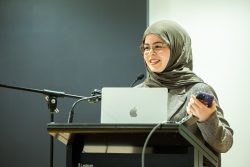
I do this myself through JRS Australia’s leadership program, where I share my story at school and community events, and advocate for the rights of all refugees, migrants and people seeking asylum.
Take Action Today
Your voice and actions matter. Here’s how you can help:
- Advocate by contacting your local representatives to call for a sustained ceasefire, and ongoing humanitarian access in Gaza.
- Donate to organisations providing emergency relief and support to Palestinians.
- Learn more about our Leadership Program, and how you can support people like Batoul to share their stories and inspire change.
- Partner with JRS and other organisations to create pathways for education and employment for people seeking safety and opportunity in Australia.
- Share this story to raise awareness within your community.
- Support a Human Rights Act for Australia, to ensure that all people, no matter their visa status, have access to their fundamental rights to safety, housing, health, and more.