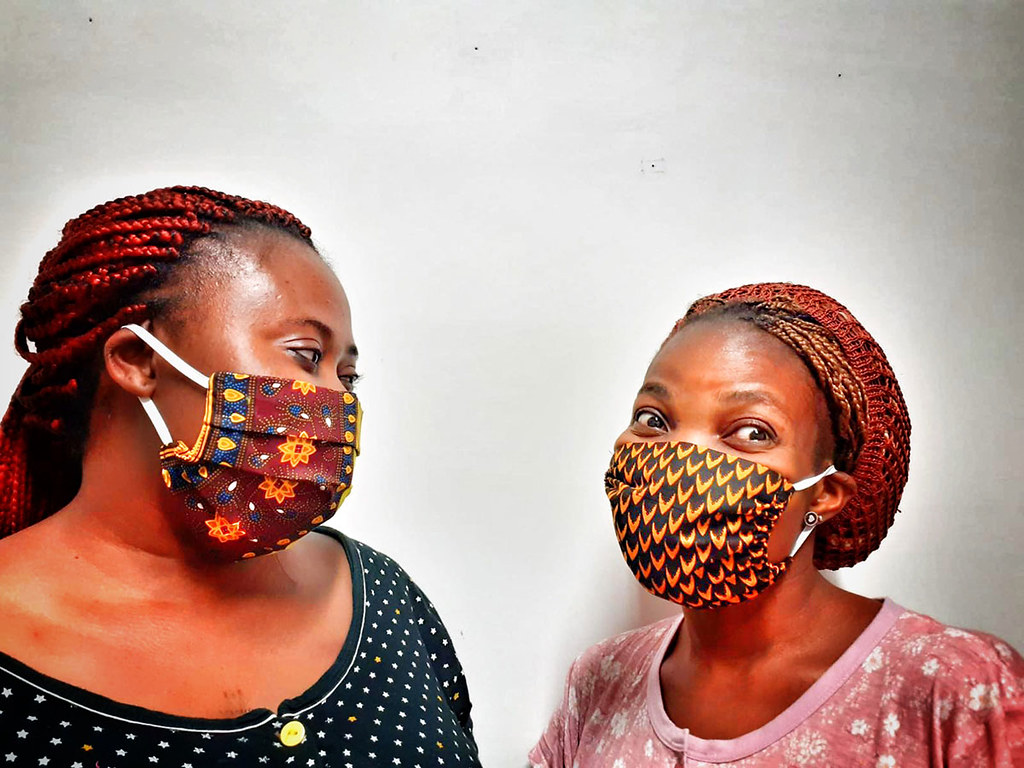
Refugee leaders train to inspire change through ethical storytelling
20 May 2026
Refugees and people seeking asylum are the holders of their own stories. They are also leaders in our community.
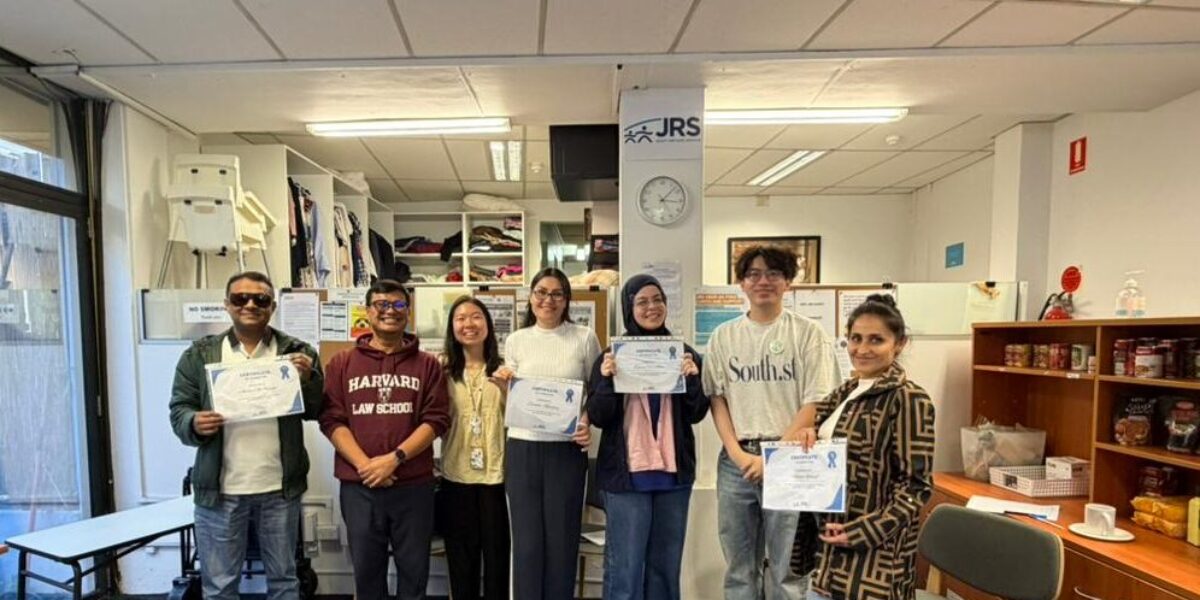
 Through JRS Australia’s Leadership Program, participants share their lived expertise and insights at school and community events, building solidarity across communities and advocating for the rights and dignity of people seeking asylum and refugees.
In April 2026, JRS Australia held leadership training across two weekends, with the goal of providing a safe space for refugee leaders to boost their confidence, sharpen their public speaking skills, and learn more about what ethical storytelling means for them.
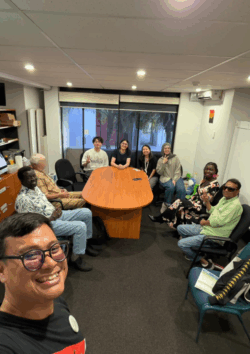
The first weekend session began by envisioning what a leader looks like. Leaders shared stories about people who they see as leaders in their life. Participants reflected that leadership comes in many forms, and is linked to community responsibility, sharing: “a leader is someone who not only knows a lot but is also wise;”and “a leader is someone who communicates and listens”.
We extend our deep gratitude to Abang Othow, founder of Buckets of Hope, who visited us for lunch and shared her story with the leaders. Abang spoke about her background as a refugee, and how her lived experience informs her emotional wellbeing workshops. This session was very inspiring.
On the second weekend, we welcomed David Crisante from Future Science Talks for a public speaking workshop, where participants practised posture, body language, tone, and responding to difficult questions in advocacy settings.
Participants worked through practical exercises designed to build confidence speaking in front of groups and handling challenging conversations.
Ethical Storytelling
The training also explored ethical storytelling and the role storytelling plays in advocacy work.
Participants reflected on how stories can change depending on audience and purpose, and discussed the importance of maintaining agency over our personal experiences. Nobody should ever feel pressure to share more than they want to.
“You don’t need to share every part of your story for your voice to matter,” shared Joannie, our Refugee Leadership Officer.
“Your lived experience informs your expertise.”
Participants also engaged in a workshop around boundaries, mental health and self-care in storytelling and advocacy work. One participant reflected afterwards: “I feel more confident about what and how to tell my story, and to protect myself and the audience.”
Students leading the way
At JRS we are grateful to host a number of students for placements across our Programs. We were proud to welcome two students from our Policy and Advocacy team, Putra Aditya and Wilson Yau, who supported the leadership training across both weekends.
“It was really special seeing people become more comfortable speaking up and supporting each other,” shared Putra.
“Ethical storytelling applies to everyone,” says Wilson. “The listener, the storyteller – anyone who has the privilege of engaging with someone’s lived experience.”
Supporting Leadership
This Refugee Leadership Training was offered as part of JRS Australia’s ongoing work supporting refugee leaders to build confidence, strengthen advocacy skills, and share their lived experiences on their own terms. Learn more about our Refugee Leadership Program here.
And if you would like to listen to more leaders’ stories, join us following Refugee Week for our Refugee Leadership exhibition, where leaders will be showcase their work at Canva Space in Sydney on Friday 26 June. Spaces are limited. RSVP here.