JRS Australia responds to Federal Budget 2026-27
18 May 2026
JRS Australia responds to Federal Budget 2026-27
We are concerned about the Federal Budget handed down on Tuesday 12 May 2026, and the commentary about migration taking place in response.
While the Government has offered some welcome investments in skilled migration, the Budget does not respond meaningfully to growing global displacement, and continues to invest in policies that leave people seeking asylum excluded from safety, security, and economic participation.
Our policies should reflect the dignity and potential of every person, and the values of fairness and welcome that Australians aspire to uphold. We would like to see this better reflected in our Budget, and in the language of our political leaders.
Humanitarian protection
At a time where millions of people around the world are being displaced by war and persecution, the Australian Government has chosen not to expand its humanitarian program or invest in more durable pathways to protection.
The quota for the humanitarian program will remain at 20,000 places, with a budget allocation 18% lower than originally forecasted spending.
This is disappointing, particularly when we can see the scale of crises taking place so close to home. Approximately 1.6 million refugees and people seeking asylum have been displaced due to the crisis in Myanmar, for example, without durable pathways to protection.
Failing to increase the humanitarian quota means real people will be left in unsafe and unsustainable situations, and displacement will continue to threaten regional stability.
“Given the vast scale of need for humanitarian resettlement across the globe and Australia’s capacity to welcome refugees, we have a responsibility to increase this quota and give hope to more people,” shared Fr Brett O’Neill, S.J., Country Director at JRS Australia.
Read our submission on Australia’s humanitarian program here for more information.
Barriers to participation for people seeking asylum
The Federal Budget includes some promising investment in skilled migration initiatives, overseas skills recognition, and support for employment for refugees in regional locations. We also welcome the $10.8 million from 2026 to 2028 allocated for community-led health initiatives for refugee and migrant women.
However, we know that people seeking asylum and many other migrants already living in Australia continue to face significant barriers to employment, stability, and participation that are not addressed in this budget.
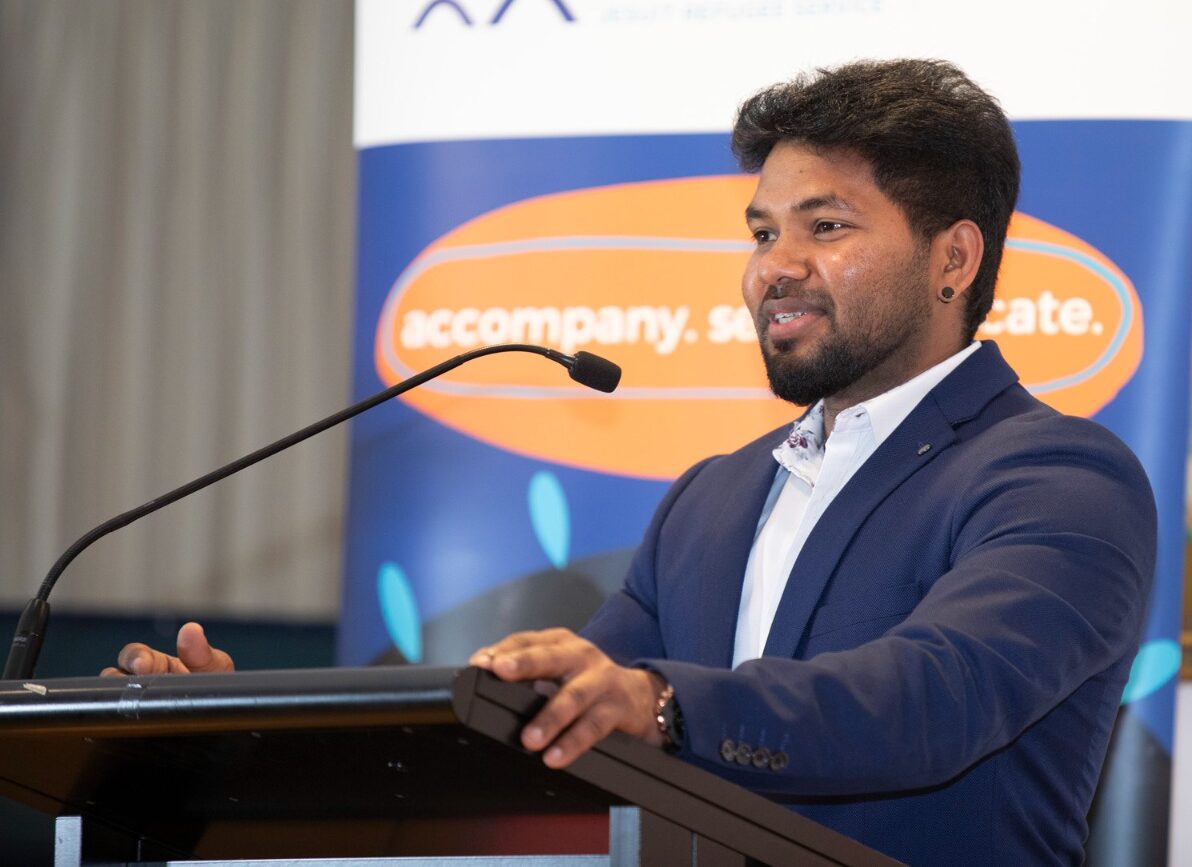
“We meet people every day – engineers, scientists, medical professionals, teachers – who are ready to work, contribute, and build their futures here,” shares Tamana Mirzada, Employment Program Manager at JRS Australia.
“But people seeking asylum are prevented from work and study because of unnecessary barriers, and prolonged uncertainty about their rights in Australia.”
Through our Employment Program, we see the enormous potential of people who are too often locked out of meaningful work, despite labour shortages across many sectors of the economy.
Research from the Productivity Fast Track, shows that increasing recognition of prior learning for refugees and people seeking asylum could unlock tens of thousands of skilled professionals into the workforce, reduce shortages in critical sectors such as health and education, and generate billions in economic growth.
More importantly, it would allow people seeking asylum to put their expertise to use and participate fully in Australian society.
Deterrence over durable solutions
This is another missed opportunity in the Federal Budget, with substantial funding directed towards detention and border enforcement measures, while long-term and dignified solutions for people seeking asylum remain underfunded.
The Government has re-committed over $1 billion towards the maintenance of dangerous offshore and onshore detention practices. And substantial new migration spending is directed towards compliance, visa scrutiny, and ‘migration system integrity’, rather than expanding durable pathways to protection.
Meanwhile, there has been no increase in funding for financial safety nets for people seeking asylum, which have already seen severe cuts, despite high rates of homelessness and destitution amongst people seeking asylum in Australia.
“People seeking asylum are members of our communities, with dignity, capability, and aspirations for the future,” shared Molly Jackson, Head of Policy, Advocacy and Communications at JRS Australia.
“Like everyone, they want to work, contribute, care for their families, and rebuild their lives in safety. The Budget should reflect this and set everyone in Australia up for success.”
We need inclusion, not division.
We are troubled by the increasingly hostile language about migrants and people seeking asylum that has emerged in public debate following the Federal Budget.
Political leaders have a responsibility to speak about migrants and people seeking asylum in ways that uphold everyone’s dignity and safety. And to speak the truth.
We can meet the challenges facing our communities without turning people against one another. Australia can both strengthen its economy and uphold its humanitarian responsibilities. These goals are not in conflict: we are strongest when we give everyone a fair go.
“We must resist narratives that encourage fear or suspicion towards people seeking safety, who are amongst the most vulnerable in our community,” shared Fr. Brett O’Neill, S.J.
“Inclusive and thriving communities are built by investing in people, and bringing communities together, not by deepening exclusion and insecurity.”
Now more than ever we need leadership that tells a different story, and unites us in shared hope for a better Australia.
Explore more